
Our Work
Selected work across real emergency management programs
TREM's project history includes planning, mitigation, exercises, hazardous-materials analysis, risk assessment, continuity, and program development for public agencies and institutions.
These examples show how the scope changes with the organization and mission. They are selected from documented TREM engagements and presented at a level appropriate for public past-performance use.
Portfolio at a glance
Organizations served
- County & Regional Government
- Municipalities
- State Agencies
- Higher Education
- Tribal Government
- Public Health & Healthcare
Disciplines represented
- Emergency Planning
- Hazard Mitigation
- Training & Exercises
- Hazardous Materials
- Hazard & Risk Assessment
- Program & Continuity Development
Hazard Mitigation Planning
- Client
- Johnson County, Iowa
- Location
- Johnson County, Iowa
- Project type
- Hazard Mitigation Planning
Multi-Jurisdictional Hazard Mitigation Planning
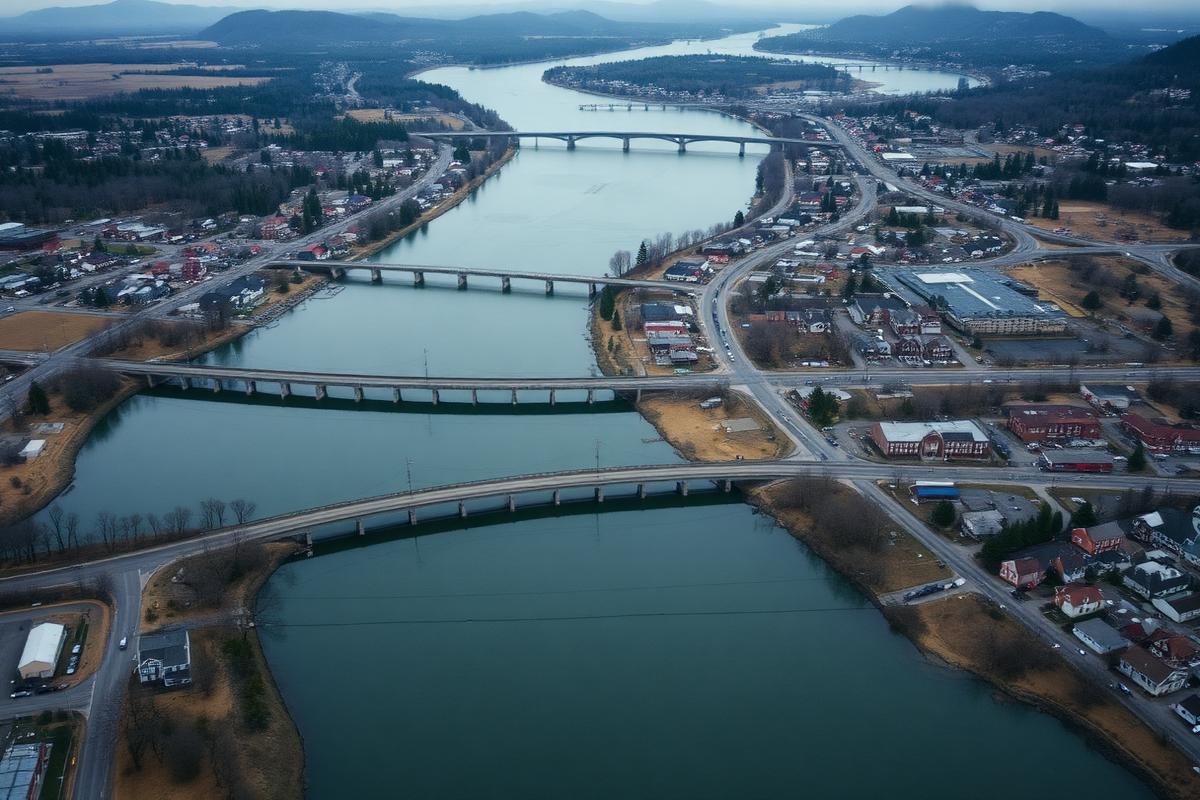
TREM supported development of a multi-jurisdictional hazard mitigation plan combining jurisdiction participation, capability assessment, hazard and vulnerability analysis, mitigation strategy development, mapping, public engagement, review, adoption support, and FEMA plan-review documentation.
The need
Multi-jurisdictional mitigation planning must create one compliant regional framework while still documenting the risks, capabilities, priorities, and actions of each participating jurisdiction.
Our approach
The work followed a structured planning process: planning-team coordination and jurisdiction points of contact, planning meetings, surveys, capability assessment, hazard maps and supporting datasets, review and development of mitigation actions, public involvement, quality assurance, and adoption support.
Collaboration
Jurisdiction points of contact, stakeholder participation, and public input fed the plan directly. Capability assessments and local mitigation actions were documented jurisdiction by jurisdiction, with resolutions and adoption documentation carried through closeout.
Documented result
FEMA Region 7 approved the Johnson County Hazard Mitigation Plan in July 2025, with the approval period running through July 2, 2030.
Scope of work
- Planning-team and jurisdiction coordination
- Capability assessments
- Hazard and vulnerability analysis
- Hazard maps and supporting datasets
- Mitigation action review and strategy development
- Public and stakeholder engagement
- FEMA Local Mitigation Plan Review Tool documentation
- Adoption and closeout support
Related service
Explore Hazard Mitigation PlanningHazardous Materials
- Client
- Region 6 Local Emergency Planning Committee
- Location
- Iowa
- Project type
- Hazardous Materials Commodity Flow Study
Regional Hazardous Materials Commodity Flow Study
A regional hazardous-materials commodity flow study covering Region 6's nine member counties plus Dubuque County, built from field observation and multiple transportation, facility, incident, and response-capability data sources.
The need
Understanding what moves through a region, and where it passes people, facilities, and infrastructure, requires both structured field observation and a wide set of regulatory and historical data.
Our approach
Study methods addressed roadway, railway, waterway, and pipeline transportation, Tier II facility information, spill and crash data, vulnerable facilities and areas, local response capabilities, and local recommendations. Roadway work used on-site placarded-vehicle observation with cameras, structured data collection, and multiple survey locations across the study area.
Collaboration
Survey locations, capability documentation, and data requests were coordinated with the committee and local response partners so the observation work reflected the corridors and facilities that matter regionally.
Documented result
The project archive includes a completed comprehensive regional commodity flow study and supporting appendices developed from field observation and multiple transportation, facility, incident, and response-capability data sources.

Scope of work
- Regional data collection strategy
- Roadway, rail, waterway, and pipeline analysis
- Tier II facility and vulnerable-facility information
- Spill and crash data review
- Local response capability documentation
- Maps, datasets, and appendices
- Comprehensive regional commodity flow study
Related service
Explore Hazardous Materials Commodity Flow StudiesEmergency Planning
- Client
- University of Northern Iowa
- Location
- Cedar Falls, Iowa
- Project type
- Emergency Action Planning
University Emergency Action Planning
A campus Emergency Action Plan integrating incident-driven procedures, emergency communications, evacuation and shelter-in-place guidance, training and maintenance, facility-specific guides, and OSHA emergency-action-plan requirements.
The need
A campus plan has to work for faculty, staff, students, and visitors across many buildings and use cases, and still satisfy regulatory expectations.
Our approach
The 2023 plan pairs threat analysis and prioritization with procedures written for the people executing them, covering active threat, bomb threat, civil unrest, fire, hazardous materials, medical emergencies, severe weather, suspicious mail or package, and workplace safety and security, plus evacuation and shelter-in-place guidance.
Collaboration
The deliverable was developed with university and stakeholder input, including facility-specific guidance built for individual campus buildings and a communications framework usable by campus constituents.
Documented result
The archive contains the 2023 University of Northern Iowa Emergency Action Plan and final production files, including facility-specific guidance and OSHA 1910.38 crosswalk references.
Scope of work
- Emergency Action Plan base document
- Threat analysis and prioritization
- Incident-driven action procedures
- Emergency communications framework
- Evacuation and shelter-in-place procedures
- Facility-specific guides
- Training and maintenance approach
- OSHA 1910.38 crosswalk and compliance references
Related service
Explore Emergency Action PlansProgram & Organizational Development
- Client
- Iowa Economic Development Authority, Iowa Finance Authority & Iowa Insurance Division
- Location
- State of Iowa
- Project type
- Program Assessment / Emergency Planning / Continuity
Emergency Preparedness Program Assessment & Continuity Planning
A state-agency preparedness program assessment that moved directly into implementation, producing emergency operations and continuity planning deliverables for three agencies.
The need
Agencies often need to know where their preparedness program actually stands before they invest in new plans, training, or equipment. Assessment first, implementation second.
Our approach
TREM completed an Emergency Preparedness Program Assessment using threat, vulnerability, and consequence concepts. Inputs included open-source information, public agencies, on-site and virtual interviews, and an employee survey with 155 respondents. The assessment examined threats, vulnerability, planning, training, exercises, equipment, remote work and continuity needs, communications, staff roles, and essential-function considerations.
Collaboration
Agency leadership and staff participated through interviews and the survey, and findings were translated into generalized, implementable recommendations rather than a standalone report.
Documented result
The engagement moved from a documented preparedness assessment into implementation-focused emergency operations and continuity planning, with EOP and COOP deliverables preserved in the project archive.
Scope of work
- Emergency Preparedness Program Assessment
- Employee survey and interview program
- Emergency Operations Plan deliverables
- Continuity of Operations Plan deliverables
- Essential functions, orders of succession, and delegations of authority
- Continuity facilities, communications, and human capital planning
- Vital records, databases, continuity operations, and reconstitution
- Training and exercise approach with program-specific needs
Assessment recommendations, agency vulnerabilities, and internal risk scoring are not reproduced publicly.
Training & Exercises
- Client
- McLennan County Office of Emergency Management
- Location
- McLennan County, Texas
- Project type
- HSEEP Functional Exercise
EOC Functional Exercise Design & Evaluation
Full-cycle HSEEP support for an emergency operations center functional exercise, from planning-team formation and documentation through onsite conduct, evaluation, and after-action reporting.
The need
A functional exercise is only as useful as its design and its evaluation. Objectives, documentation, and evaluator structure determine whether an EOC learns anything it can act on.
Our approach
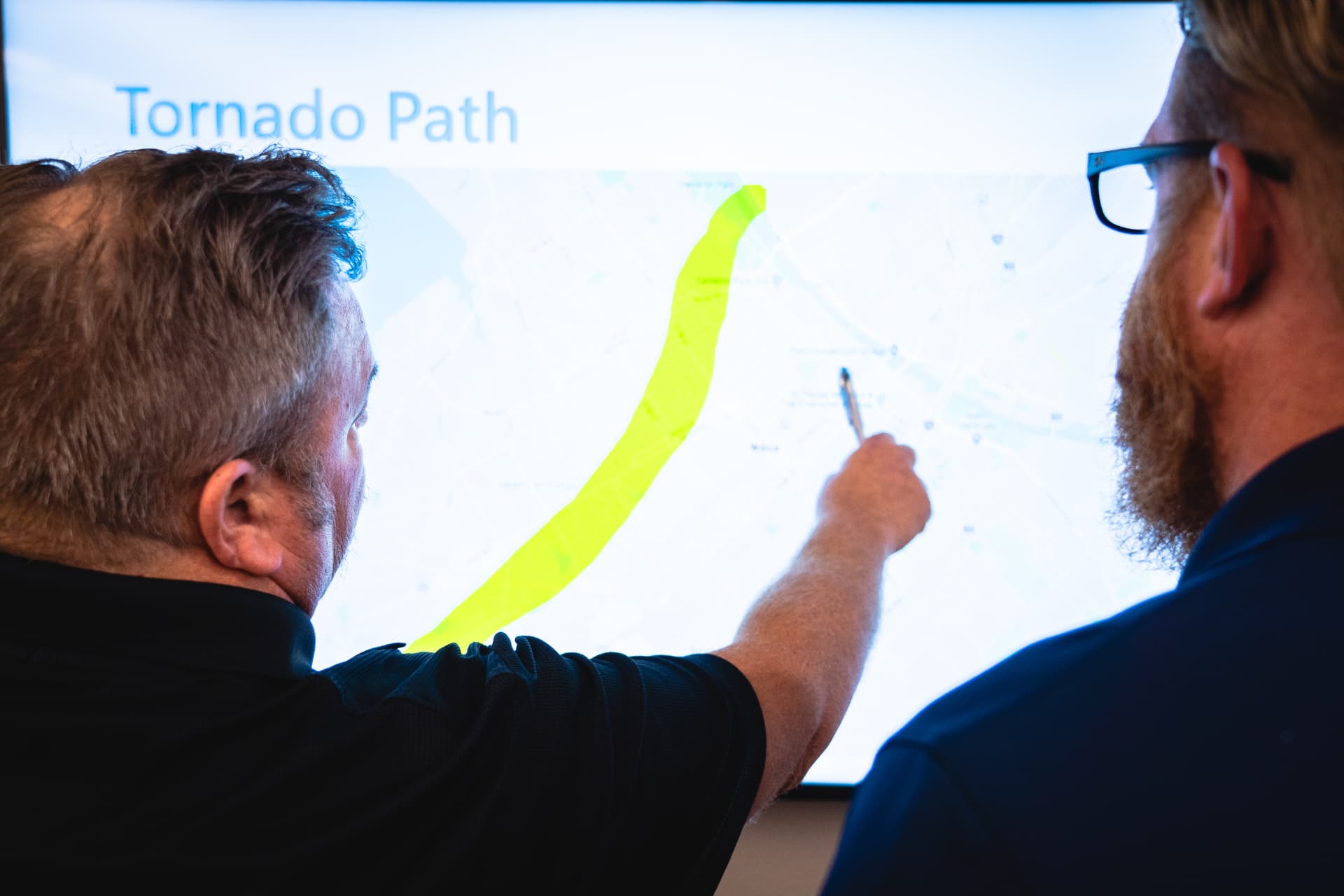
TREM was retained to facilitate, develop, and review an EOC functional exercise. Scope included project initiation and timeline, review of plans, policies, and procedures, establishment of the exercise planning team, scope, objective, and scenario development, logistics, and a kickoff, followed by the full HSEEP documentation set.
Collaboration
The exercise planning team drove objectives and extent of play. TREM provided onsite exercise play support and controller and evaluator staff, then ran the hotwash and participant surveys, drafted the after-action report, facilitated planning-team review, and completed closeout.
Documented result
The project archive contains final exercise-planning, evaluation, and after-action deliverables, including the ExPlan, MSEL, EEGs, and AAR/IP.
Scope of work
- Exercise Plan (ExPlan)
- Master Scenario Events List (MSEL)
- Controller and Evaluator Handbook
- Extent of Play Agreement
- Exercise Evaluation Guides (EEGs)
- Onsite controller and evaluator support
- Hotwash and participant surveys
- Draft and final After-Action Report and Improvement Plan
Exercise findings and operational details remain with the client.
Related service
Explore Training & ExercisesHazard & Risk Assessment
- Client
- Dubuque County Emergency Management Agency
- Location
- Dubuque County, Iowa
- Project type
- Hazard Analysis & Risk Assessment
Countywide Hazard Analysis & Risk Assessment
A countywide all-hazards assessment connecting community characteristics, infrastructure, hazard history, likelihood, vulnerability, and consequences into a structured risk picture for emergency-management decision-making.
The need
A risk assessment is only useful when it is grounded in the actual community, its people, economy, land use, and infrastructure, rather than hazard lists alone.
Our approach
The 2025 assessment builds a whole-community profile covering historical, cultural, and natural resources, the built environment, geography, climate, land use, elevation, watersheds and flooding, transportation, utilities, demographics, and economic and development trends. A defined hazard identification and ranking methodology and disaster declaration history then support detailed natural, technological, and human-caused hazard profiles.
Collaboration
Each hazard profile is documented consistently: description, location, magnitude and severity, past occurrence, likelihood, vulnerability, and a consequence summary, so county staff can trace and defend how a ranking was reached.
Scope of work
- Whole-community profile
- Built environment, transportation, and utilities analysis
- Geography, climate, land use, watershed, and flooding analysis
- Demographic, economic, and development-trend profile
- Hazard identification and ranking methodology
- Disaster declaration history
- Natural, technological, and human-caused hazard profiles
Related service
Explore Hazard & Risk AssessmentsPortfolio
Selected experience across emergency management
A representative sample of engagements, not a complete client list.
- Pueblo of ZuniTribal Hazard Mitigation PlanningNew Mexico
- City of Center PointEmergency Operations PlanningIowa
- Region 6 Local Emergency Planning CommitteeESF-10 / Hazardous Materials PlanningIowa
- University of Northern IowaEmergency Action PlanningIowa
- Iowa Economic Development Authority / Iowa Finance Authority / Iowa Insurance DivisionProgram Assessment, Emergency Planning & ContinuityIowa
- McLennan County Office of Emergency ManagementEOC Functional ExerciseTexas
- Carroll County Public Health DepartmentHealthcare Full-Scale ExerciseIowa
- Dubuque County Emergency Management AgencyHazard Analysis & Risk AssessmentIowa
- Johnson County, IowaMulti-Jurisdictional Hazard Mitigation PlanningIowa
- Region 6 Local Emergency Planning CommitteeRegional Hazardous Materials Commodity Flow StudyIowa
Client Confidentiality
Some of the work stays with the client
Some emergency-management work involves sensitive operational information. Exercise findings, security-sensitive content, scenario detail, and client operational information are not reproduced publicly. TREM presents only project information appropriate for public past-performance use.
How We Work
The work stays close to the people responsible for using it
TREM's project files show the same pattern across very different engagements: stakeholder input, structured analysis, iterative review, practical deliverables, and direct communication throughout the project. The objective is not simply to complete a document. It is to leave the organization with work it can understand, maintain, and use.
- 01Collaborative development
- 02Traceable research and analysis
- 03Clear project milestones
- 04Client review throughout the engagement
- 05Deliverables built for implementation
- 06Technology-enabled project coordination
What does your next project need to accomplish?
Tell us the requirement, operating challenge, or capability you need to strengthen. TREM can help define the right scope, process, and deliverable.