
Services
Emergency management services built for real-world use
Emergency management is more than completing a plan, conducting an exercise, or meeting a grant requirement. The work has to make sense for the people who will use it when conditions are difficult, information is incomplete, and decisions matter.
Two Rivers Emergency Management provides specialized planning, preparedness, mitigation, exercise, and program-development services to communities and organizations across the country.
Our work combines practical emergency management experience, disciplined project management, meaningful stakeholder engagement, and technology-enabled collaboration to develop solutions that are useful, sustainable, and built around each client's actual capabilities.
Emergency Planning
Plans should support decisions and operations, not simply satisfy a requirement.
TREM develops and updates emergency plans that clearly define how organizations coordinate, communicate, make decisions, and manage incidents. We work directly with the people responsible for implementing the plan so procedures reflect actual resources, authorities, capabilities, and relationships.
Capabilities
- Emergency Operations Plans and Comprehensive Emergency Management Plans
- Emergency Action Plans
- Hazard-specific annexes
- Functional annexes
- Department and agency plans
- Operational concepts and procedures
- Plan implementation and maintenance programs
- Stakeholder engagement and planning workshops
- Plan reviews and gap assessments
Related TREM work
University emergency action planningHazard Mitigation Planning
Effective mitigation planning should help communities make better long-term risk-reduction decisions.
TREM supports local and multi-jurisdictional hazard mitigation planning from initial project organization through risk assessment, mitigation strategy development, public engagement, adoption, and approval. Our approach emphasizes meaningful participation and the development of mitigation actions that communities can realistically implement.
Capabilities
- Local Hazard Mitigation Plans
- Multi-Jurisdictional Hazard Mitigation Plans
- Five-year plan updates
- Hazard identification and risk assessment
- Capability assessments
- Vulnerability analysis
- Mitigation strategy development
- Community and stakeholder engagement
- FEMA plan review support
- Plan adoption and implementation support
Related TREM work
Johnson County multi-jurisdictional hazard mitigation planning
Training & Exercises
Exercises should test the things that matter and produce improvements that actually occur.
TREM designs and facilitates discussion-based and operations-based exercises using Homeland Security Exercise and Evaluation Program principles while tailoring each exercise to the organization, participants, capabilities, and decisions being tested.
Capabilities
- Seminars and workshops
- Tabletop exercises
- Functional exercises
- Full-scale exercise support
- Exercise planning and design
- Exercise facilitation
- Evaluation
- After-Action Reports and Improvement Plans
- Corrective-action tracking
- Multi-year exercise program development
Related TREM work
McLennan County EOC functional exercise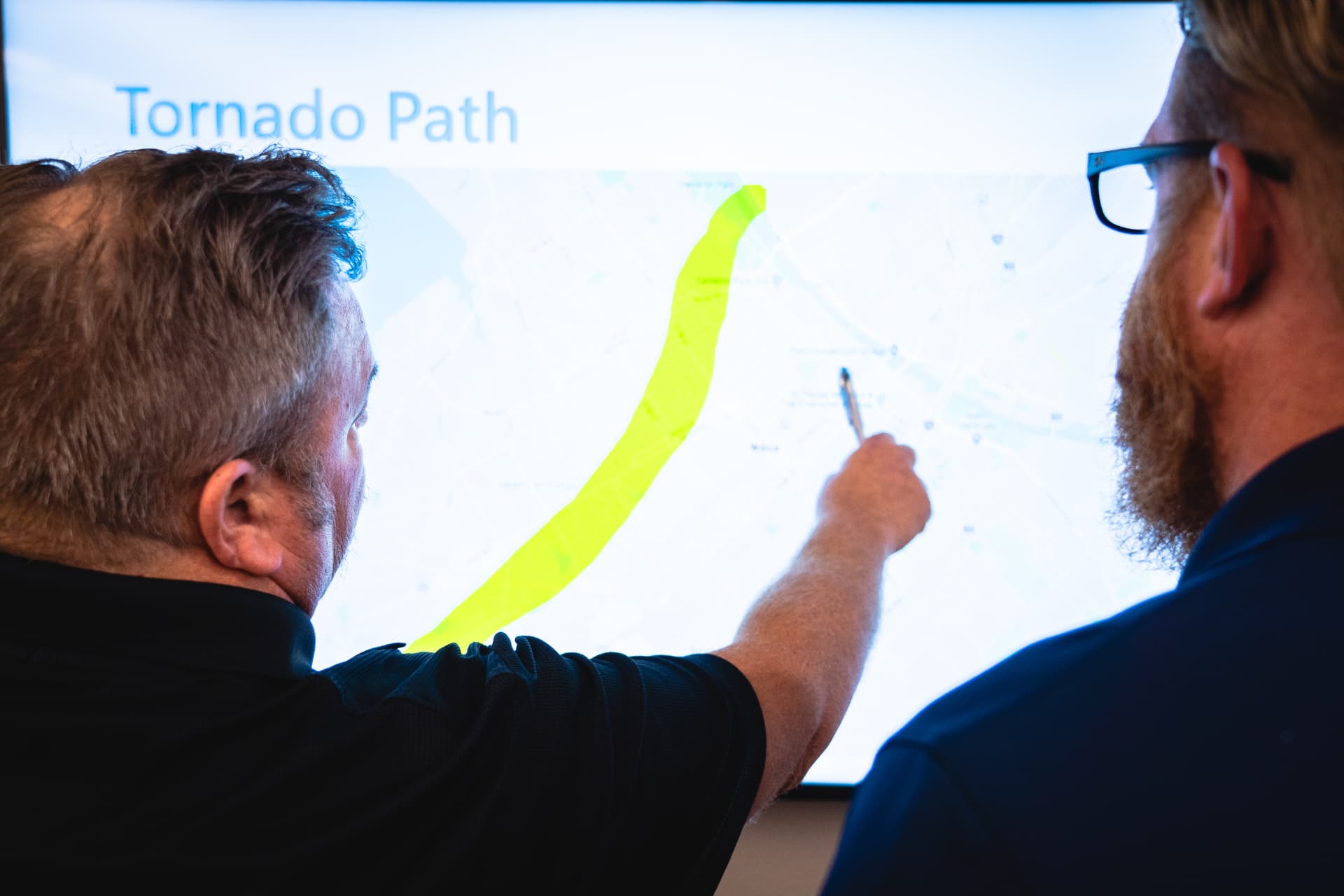
Hazardous Materials Commodity Flow Studies
Communities need to understand what hazardous materials move through their jurisdictions, where those materials travel, and how transportation patterns affect response risk.
TREM conducts Hazardous Materials Commodity Flow Studies that combine available transportation data, field observations, stakeholder knowledge, facility information, response capabilities, and risk analysis to provide communities with actionable information for preparedness and response.
Capabilities
- Highway commodity flow analysis
- Rail commodity flow analysis
- Fixed-facility information
- Transportation corridor assessment
- Field data collection
- Hazardous material identification and analysis
- Emergency response capability considerations
- Risk and vulnerability analysis
- Planning and preparedness recommendations
Related TREM work
Region 6 LEPC regional commodity flow studyEmergency Management Program & Organizational Development
Strong emergency management programs require more than good plans.
TREM works with emergency management organizations to assess current capabilities, identify gaps, establish priorities, and build practical programs that can mature over time. The work can address organizational structure, strategic direction, preparedness processes, performance, standards, and long-term program development.
Capabilities
- Emergency management program assessments
- Strategic planning
- Capability and gap assessments
- Organizational structure reviews
- Program development
- Planning and preparedness program design
- Policy and procedure development
- Accreditation and standards readiness support
- Performance measures and program metrics
- Multi-year improvement strategies
Related TREM work
State-agency preparedness assessment and continuity planningSupporting capabilities
Available alongside every engagement
These capabilities are frequently delivered as part of a larger project or as focused, standalone support when an organization needs a specific product.
Continuity Planning
TREM develops practical continuity programs that identify what must continue, what resources those functions depend on, and how an organization can maintain or rapidly restore operations following disruption.
- Continuity of Operations and Continuity of Government plans
- Business continuity planning
- Essential function identification
- Orders of succession and delegations of authority
- Alternate facility planning
- Continuity strategies
- Continuity exercises
- Plan maintenance
Related TREM work
State-agency preparedness assessment and continuity planningSpecial Event Planning & Support
TREM helps organizations develop scalable emergency management systems for planned events, from early planning through event-day operations and post-event improvement.
- Event Emergency Action Plans
- Emergency coordination structures
- ECC and EOC planning
- Severe weather procedures
- Evacuation and shelter considerations
- Communications planning
- Stakeholder coordination
- Event exercises
- Event-day support
- After-action evaluation
Hazard & Risk Assessments
TREM helps organizations evaluate how hazards could affect people, infrastructure, operations, services, and community capabilities so risk information can support planning, mitigation, preparedness, investment, and policy decisions.
- Hazard Identification and Risk Assessment
- THIRA support
- Community risk assessments
- Vulnerability assessments
- Capability assessments
- Critical infrastructure considerations
- Risk prioritization
- Data-supported analysis
Related TREM work
Dubuque County hazard analysisPolicies, SOPs & SOGs
TREM develops policies, Standard Operating Procedures, Standard Operating Guidelines, checklists, job aids, and other operational tools that translate broader plans into repeatable actions for personnel.
- Roles and responsibilities
- Activation triggers
- Decision points
- Coordination procedures
- Communications procedures
- Documentation standards
- Escalation procedures
- Checklists and job aids
Grant Strategy & Program Support
TREM helps organizations identify, develop, and manage emergency management and preparedness projects that align funding opportunities with meaningful capability improvements.
- Grant opportunity and project strategy
- Application development
- Scope development
- Project narratives
- Supporting documentation
- Preparedness and mitigation grant support
- Grant-funded project implementation support
Additional disaster recovery and Public Assistance consulting support may be available based on project needs.
The TREM approach
More than a deliverable
A consulting engagement should result in more than a document on a shelf. TREM works directly with clients to understand the organization, involve the right stakeholders, manage the project clearly, and develop products that can be implemented and maintained after the engagement ends.
What clients can expect
- 01Direct access to experienced emergency management professionals
- 02Practical recommendations grounded in emergency management operations
- 03Deliverables tailored to the organization
- 04Clear communication and defined project milestones
- 05Meaningful stakeholder engagement
- 06Solutions designed to remain usable after the engagement ends
Client experience
A more connected project experience
A consulting project should not disappear into a chain of emails and periodic status meetings. TREM projects are supported by structured project management and collaborative tools that help clients stay connected throughout the process.

Through River Gauge, TREM's client project environment, participating clients can access project information, monitor milestones, complete assigned activities, review documents, provide feedback, and follow progress from initiation through final delivery.
Let's talk about your project
Every organization has different requirements, capabilities, challenges, and objectives. We start by understanding what you need to accomplish and then build the project around it.